
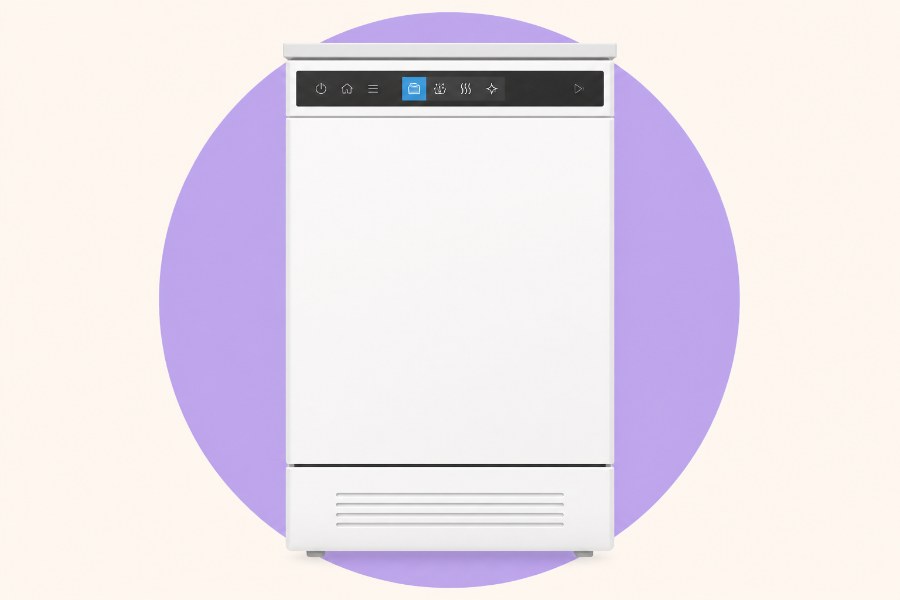
Do dental practices need a washer disinfector?
Kylie Robb, 4 November 2026.
Short answer: Washer disinfectors are not ‘mandatory’ for dental practices. The Royal Australian College of General Practitioners (RACGP) infection prevention and control guidelines require washer disinfectors in general practice, with general practice accreditation assessed against the requirement for a washer disinfector from 1 January 2028. AS/NZS 5369:2023 and the Australian Dental Association (ADA) Guidelines have not changed. Both still describe a mechanical cleaning pathway with an ultrasonic. A washer disinfector is necessary for a dental practice if a device’s instructions for use (IFU) require thermal disinfection for reprocessing.
By 1 January 2028, GP practices require a washer disinfector
On 12 June 2026 the RACGP republished section 10 of its Infection prevention and control guidelines to align with AS/NZS 5369:2023. It says that general practices that reprocess their own instruments will use a washer disinfector. Manual cleaning is kept only where the IFU requires it. The ultrasonic is an optional step before the washer disinfector, not instead of. Accreditation assessors will look for washer disinfectors in GP practices from 1 January 2028.
The RACGP is a professional college, not a regulator. The college sets standards for education and practice, and general practices are accredited against those Standards by accrediting agencies under the National General Practice Accreditation Scheme.
Accreditation against these Standards is voluntary for a GP practice, but a practice must be accredited, or registered for accreditation, to receive Practice Incentives Program payments. Dentistry does not have the same funding links or incentives. Dental practices that choose accreditation are assessed against different standards, which do not prescribe a washer disinfector in the way the RACGP guidelines do.


In-person course
Infection Control in Sydney
Fri 20 Nov 2026, 9.00 am to 4.30 pm
Canterbury League Club, Belmore
Evaluating reprocessing rooms against today’s requirements is one of the topics this training day covers.
$330 a seat. Teams of three or more get a special rate.

I am concerned they will become mandatory for dental, should I be worried?
Dental teams are watching carefully because the RACGP based its decision on the reprocessing standard that dental works to as well.
AS/NZS 5369 says that where the IFU recommends a specific disinfection process, that recommendation shall be followed. On cleaning, the standard notes that an automated cleaning process in a washer disinfector should be used because an automated process is easier to replicate than a manual cleaning process. Its guidance appendix says that cleaning a used device is easier to standardise and control when an automated mechanical process is used, while recognising that an automated process might not suit some fragile or complex devices. The RACGP has said its update aligns with AS/NZS 5369, and this wording is the likely basis.
The difference between general practice and dentistry is the standards dental and GP settings follow to achieve accreditation and the funding tied to accreditation.
The requirement for a washer disinfector sits in the RACGP guidelines, which do not apply to dentistry. What makes one necessary for a dental practice is whether the devices it uses require one for reprocessing.
Kylie Robb, Founder of Niche Dental
The Dental Board of Australia regulates dental practitioners through the Ahpra and National Boards shared Code of conduct. The Code asks practitioners to apply effective infection prevention and control measures and to manage risk. It does not prescribe specific cleaning methods or equipment. The Health Practitioner Regulation (NSW) Regulation 2025, in force from 1 September 2025, applies to dental practitioners. Schedule 2 clause 15 requires cleaning to be consistent with AS 5369 and to involve mechanical or physical action. It gives an ultrasonic cleaner, a washer disinfector or another specialised washing machine as examples, so the law does not pick one. Other states do not go that far. Queensland asks each practice to write its own infection control management plan, and the rest leave the cleaning pathway to the Dental Board, the IFU and AS/NZS 5369. The IFU for the devices a practitioner chooses to use is where a washer disinfector can become necessary for a dental practice.
Many handpiece IFU rule out the ultrasonic for reprocessing and allow either manual cleaning or a thermal washer disinfector, so the practice has a choice. This is where I suggest practices check IFUs carefully as the devices they choose to use determines the pathway they need to follow to use again on another patient.
But, who knows what the future will bring. Today, the ADA Guidelines for Infection Prevention and Control (Amended 2026) and AS/NZS 5369 still describe an ultrasonic and a washer disinfector as mechanical cleaning pathways.
Can a dental practice keep using an ultrasonic cleaner?
Yes, as a controlled process. AS/NZS 5369:2023 lists manual cleaning followed by ultrasonic cleaning as a cleaning pathway for facilities without a washer disinfector. It sets conditions. Visible soiling is removed before a device goes into the ultrasonic. Where the ultrasonic does not take the device through the full cleaning process, the device is given further manual or mechanical cleaning. The guidance appendix of AS/NZS 5369 explains that the action of an ultrasonic cleaner is to loosen debris. The equipment is used according to its own instructions. Water and cleaning solution are changed daily, and whenever soil is visible in the tank.
The standard also requires the performance of the ultrasonic cleaner to be tested daily in accordance with AS 2773:2019. AS 2773 states that an ultrasonic cleaner cannot disinfect, so instruments come out clean but not disinfected. The role of the steriliser is to do the final processing.
Should I be looking at getting a washer disinfector anyway?
I am an advocate for the benefits of washer disinfectors. Reduced manual handling of devices can extend their life. There is less water splashing around the reprocessing area. The towels used to dry instruments, the scrubbing brushes and the buckets can go. The reprocessing area is quieter than one with an ultrasonic. There is less risk to the team from sharps injuries while handling contaminated pointy instruments and the cycle is recorded, which is the control the standard is pointing to.
If you are looking into washer disinfectors, get one that is the right size for the practice’s operating model and have a think about how many resources you have or may need to get to be able to accommodate them. Practitioners do note how much longer it takes for their favourite instrument to ‘go around the block’ particularly with a large washer disinfector. Will you need more favourite instruments? Generally, the team are not going to turn it on with only a couple of instruments in it, and it might take a whole morning to fill it. Once the cycle is finished, you may then have a higher volume of instruments to process that may not all fit in the available steriliser at once, especially if you use cassettes, which practices find are better with washer disinfectors, but take up more room in a steriliser. Making a commitment to employ a washer disinfector, therefore, requires a careful and realistic review of the existing and future workflow.
Where to from here?
If you want a second set of eyes on your reprocessing room, an onsite review is the place to start. I look at the pathway your devices need, what the IFUs say and how the room runs on a busy day, then give you an action list to work through. Find out about an onsite review.
If you would rather work it out with your team, bring them to the Sydney course on 20 November. Reprocessing room decisions are worked through on the day. Book the course.
Or give me a call on 0438 628 664. Always happy to talk it through.
Sources
- Ahpra and National Boards, Shared Code of conduct (2022): ahpra.gov.au
- Health Practitioner Regulation (New South Wales) Regulation 2025, NSW Government (in force 1 September 2025): legislation.nsw.gov.au
- Infection control management plans, Public Health Act 2005 (Qld), Queensland Health: health.qld.gov.au
- AS/NZS 5369:2023 Reprocessing of reusable medical devices and other devices in health and non-health related facilities, incorporating Amendment 1:2026, Standards Australia: standards.org.au
- AS 2773:2019 Ultrasonic cleaners for health service organizations, Standards Australia: standards.org.au
- Guidelines for Infection Prevention and Control, Fifth Edition Amended (2026), Australian Dental Association: portal.ada.org.au
- Infection prevention and control guidelines, Section 10, Reprocessing of reusable medical devices and other devices in general practice, The Royal Australian College of General Practitioners (revised 12 June 2026): racgp.org.au
- About the RACGP, The Royal Australian College of General Practitioners: racgp.org.au
- Practice Incentives Program eligibility, Services Australia: servicesaustralia.gov.au
Work across medical and dental? The general practice version of this question is answered at gpinfectioncontrol.com.au.
For more information contact Niche Dental: hello@niche.dental
Last updated 4 November 2026.